
You've made the decision to sell. Maybe you're relocating, downsizing, or just ready to cash in on years of equity you've built. Whatever your reason, selling a house in Charlotte, NC isn't something you should figure out on the fly.
The Queen City's real estate market has gone through real changes over the past couple of years. The frenzy of 2021 and 2022 is gone. Buyers have more options now, homes are sitting longer, and pricing your property wrong can cost you weeks or even months of your life. So before you stick a "For Sale" sign in the yard, read this guide.
We'll cover the whole process from start to finish: prepping your home, picking your selling strategy, pricing it right, handling negotiations, and closing without surprises. We'll also share actual 2026 market data for Charlotte so you're not flying blind.
What's the Charlotte Housing Market Like in 2026?
Let's start with the data because it shapes every decision you'll make as a seller.
Charlotte's market is no longer the wild seller's market it was a few years back. It's shifting toward balance. That's not bad news for sellers, but it does mean you need to be smarter about it.
Here's what the numbers say:
- Median home sale price: $415,000 (up 1.2% year-over-year as of early 2026, per Redfin)
- Average days on market: 40 to 88 days depending on neighborhood, price range, and how well the home is prepped
- Active listings: Up 27.2% year-over-year, giving buyers more choices
- Cash transactions: About 30.9% of all Charlotte home sales in the first half of 2026 were all-cash deals (Opendoor data)
- Price reductions: 33.4% of listings saw at least one price cut, which tells you that overpricing is a real problem right now
- Sale-to-list ratio: Homes are selling at about 98.9% of asking price on average
The Charlotte metro, anchored by major employers like Bank of America, Wells Fargo, and Honeywell, continues to pull in new residents. An estimated 117 people move to Charlotte every single day. That sustained demand is keeping prices steady even as inventory grows.
What this means for you as a seller: you can still get a great price, but you can't afford to be lazy about prep, pricing, or marketing.
Getting Your Charlotte Home Ready to Sell
The work you do before listing your home is often the work that determines your final sale price. Skip this part and you'll spend twice as long on the market and probably net less money.
Run a Comparative Market Analysis First
Before you do anything else, figure out what your home is actually worth in today's market. A Comparative Market Analysis (CMA) looks at recently sold homes in your area that are similar in size, condition, age, and features. This gives you a realistic starting price rather than a wishful one.
You can get a rough idea using Zillow or Realtor.com, but those automated estimates can be off by tens of thousands of dollars. A local real estate agent or Carolina Home Cash Offer can walk you through a more accurate analysis based on current neighborhood trends.
One thing to watch: the Charlotte market differs significantly by area. Uptown and South End homes have a median price around $752,500 and sell in about 26 days. Meanwhile, outer suburbs like Ballantyne West sit closer to $409,000. Dilworth, NoDa, and University City each have their own distinct pricing patterns. Your neighbor's sale price from 2022 tells you almost nothing about what your home will sell for today.
Map Out Your Selling Costs in Advance
A lot of sellers focus on the sale price and forget about what it actually costs to sell. Getting clear on this upfront helps you set realistic expectations.
Here's a rough breakdown of seller costs in Charlotte:
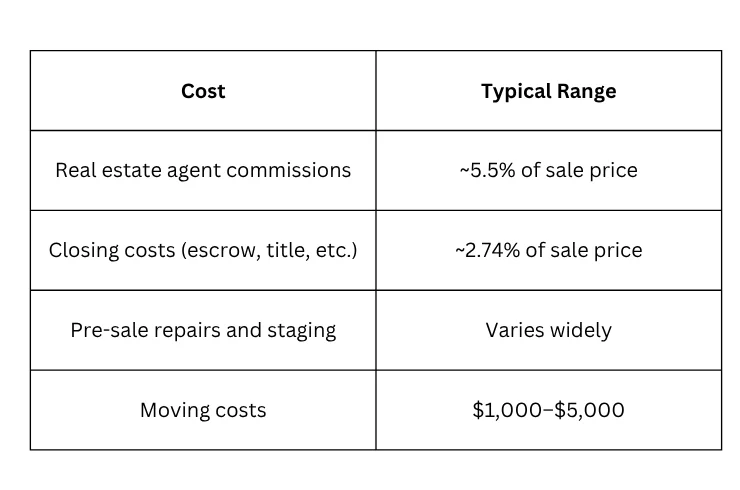
So on a $415,000 sale, you could be looking at $34,000 or more in combined commissions and closing costs before you pocket a dollar. If that number surprises you, it's a good time to explore all your selling options, including cash buyers who often cover closing costs and charge zero commissions.
Prepare the Home for Showings
First impressions really do matter. A buyer decides how they feel about a home in the first 60 seconds of walking through the door.
Start outside. Curb appeal is the first thing buyers see in person and in photos. Trim the hedges, plant some color, pressure-wash the driveway, and paint the front door if it's looking worn. In Charlotte, native plants like azaleas, boxwoods, and crepe myrtles are low-maintenance and look great.
Inside, deep-clean everything. Declutter aggressively. You want buyers to see the home, not your stuff. Neutral colors, good lighting, and clean windows make rooms feel larger and brighter. If you have the budget for professional staging, it's worth it. Staged homes sell faster and for more money.
Repairs Worth Making (and Data to Back It Up)
You don't need to renovate your whole kitchen before selling. Some repairs pay for themselves; others don't. Here's real data from the South Atlantic region on which improvements actually move the needle:
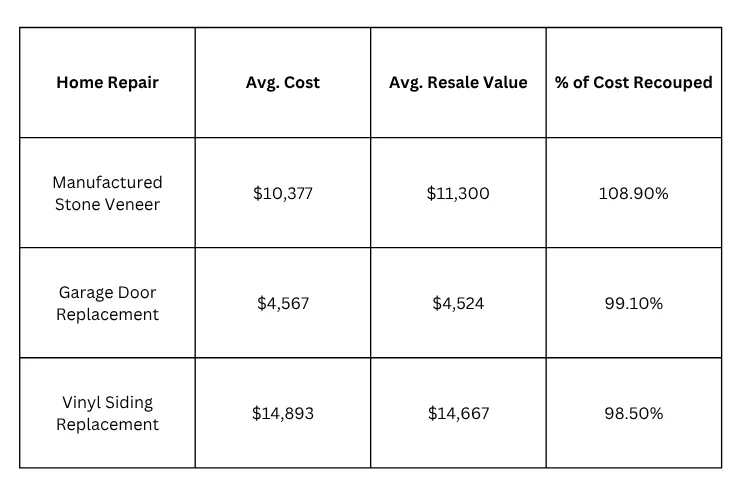
Small fixes like patching drywall, fixing leaky faucets, touching up paint, and replacing outdated fixtures cost little but help buyers feel like the home has been well cared for. That perception matters during negotiation.
3 Ways to Sell a House in Charlotte, NC
There's no single right way to sell. The best path depends on your timeline, your financial goals, and how much work you're willing to put in. Here are the three main options.
Option 1: Sell with a Real Estate Agent
This is the traditional route, and for many sellers, it still makes sense. About 86% of all home sales involve a buyer's agent, so working with an experienced listing agent gives you access to that network.
A good agent handles pricing strategy, professional photography, MLS listing, showings, negotiations, and all the paperwork. In Charlotte's current market, where strategic pricing matters more than ever, having someone with local market knowledge in your corner is genuinely valuable.
The upside: Expert guidance, better marketing reach, and stronger negotiating support.
The downside: You'll pay roughly 5.5% in total agent commissions. On a $415,000 sale, that's about $22,825 off the top.
If you go this route, interview at least three agents. Ask about their recent sales in your neighborhood, their days-on-market average, and their marketing plan. Don't just pick whoever sold a house on your street last year.
Option 2: Sell By Owner (FSBO) in Charlotte
For Sale By Owner means you handle the sale yourself, without paying a listing agent. The appeal is obvious: you keep the commission. But it's not free money.
Homes listed on the MLS sell for about 13% higher prices on average (NAR data). If you go FSBO but skip the MLS, you're limiting your exposure. Many FSBO sellers use flat-fee MLS services to get listed without paying full commission, which is a smart middle ground.
You'll also need to handle pricing, marketing, showings, negotiations, legal disclosures (North Carolina requires sellers to disclose known material defects), and the closing process. Talking to a real estate attorney at some point in the process is a smart move if you go FSBO.
The upside: You save on commissions and stay in full control.
The downside: More time, more stress, and more risk of legal or pricing mistakes if you're not experienced.
Option 3: Sell to a Cash Home Buyer in Charlotte
Cash home buyers have become a real and popular option, especially for sellers who need speed, certainty, or simply don't want to deal with the traditional listing process.
Here's how it works: you contact a cash buyer like Carolina Home Cash Offer, share some basic info about your property, and get a no-obligation offer, often within 24 hours. If you accept, you choose your closing date. The typical timeline is 7 to 14 days.
There's no agent commission, no repairs, no staging, no showings, and no risk of a buyer's financing falling through at the last minute (which happens more than people expect).
The tradeoff is that cash offers are typically below full market value. But when you factor in what you'd spend on commissions, repairs, carrying costs during months on the market, and the stress of a traditional sale, the net difference is often smaller than it appears.
Cash buyers are especially practical when you're dealing with:
- Foreclosure or missed mortgage payments
- An inherited property you don't want to maintain
- A rental with difficult tenants
- Divorce or a major life change
- Homes that need significant repairs
- Job relocation with a tight deadline
Carolina Home Cash Offer buys homes across Charlotte and the surrounding areas with a fast, transparent process and no hidden fees.
How to Price Your Charlotte Home to Sell
Pricing is probably the single most important decision you'll make in this whole process. Get it right and your home sells fast. Get it wrong and you'll sit on the market, take price cuts, and still end up netting less than you would have with a smart starting price.
Some key things to keep in mind for the current Charlotte market:
Overpricing is costly. With 33.4% of current listings taking price reductions, it's clear that a lot of sellers are starting too high. Once a home sits on the market too long, buyers start to assume something's wrong with it.
Late spring is the best time to list. Historically, homes listed in April, May, and June in Charlotte sell faster and for more money. Buyer demand peaks in spring, school-year timing drives decisions, and homes photograph better with green lawns and natural light.
Price just below a psychological threshold. Listing at $399,000 instead of $405,000 puts you in front of more buyers in online search filters. Small tweaks like this can meaningfully affect how many people see and schedule a showing on your home.
A CMA beats online estimates. Zillow and Redfin can give you a starting point, but their algorithms don't know about the new kitchen you put in or the busy road behind the back fence. A CMA done by someone who actually knows the Charlotte neighborhoods you're in will be far more accurate.
Marketing Your Charlotte Home Effectively
You can have the most beautiful house in South End, but if nobody sees it, it won't sell. Marketing is where a lot of FSBO sellers fall short, and where good agents earn their keep.
1. Professional Photography (Non-Negotiable)
Homes with professional photos sell 32% faster than those with amateur shots. Almost every buyer starts their search online, and the photos are what make them click or keep scrolling. This is not the place to cut corners.
If you can swing it, add a video walkthrough too. Listings with video get over 400% more views than those without.
2. MLS and Major Listing Sites
Your home needs to be on the MLS (Multiple Listing Service), Zillow, Realtor.com, and Redfin. These are where serious buyers and their agents are looking. Missing from any of them means missing out on buyers.
3. Social Media and Paid Advertising
Facebook and Instagram ads that target buyers in specific zip codes or income brackets can be surprisingly effective for the Charlotte market. Good agents use these tools. If you're selling yourself, it's worth learning the basics of Facebook Marketplace and targeted ad campaigns.
4. Yard Sign and Open Houses
Don't underestimate the basics. A clean, professional yard sign still captures drive-by interest. Strategically scheduled open houses on weekends, especially the first weekend after listing, can generate early buzz and competing interest.
5. Write a Listing Description That Actually Sells
Skip the generic language. "Spacious home in desirable location" tells a buyer nothing. Instead, write about what's actually great: "10-foot ceilings in the main living area, walking distance to the South End light rail, and a chef's kitchen that was fully updated in 2023." Be specific. Buyers can picture specifics.
Navigating Offers, Negotiations, and Closing in North Carolina
Once the showings start and offers come in, the selling process shifts into a different gear. Here's what to expect.
Evaluating Offers Without Rushing
Don't jump on the first offer just because it feels good in the moment. Look at the full picture:
- The price offered vs. your minimum acceptable number and current market comps
- The financing type: Cash buyers are lower risk than buyers relying on mortgage approval. Pre-approved buyers are safer than pre-qualified ones.
- Contingencies: Inspection contingencies, financing contingencies, and appraisal contingencies all affect how likely the deal is to actually close.
- Closing timeline: Does it work for your situation? A buyer offering a fast close might be more valuable than one offering slightly more money with a longer timeline.
You can counter any offer. Negotiate on price, closing date, repairs, or who covers which closing costs. Just keep emotions out of it. Buyers are making a business decision; you should too.
The Due Diligence Period in North Carolina
North Carolina has a specific legal concept called the Due Diligence Period that sellers need to understand. After an offer is accepted, the buyer pays a non-refundable due diligence fee and gets a negotiated period (often 2 to 4 weeks) to inspect the property, get an appraisal, and review all disclosures.
During this window, the buyer can walk away for any reason and only lose the due diligence fee. After it ends, they can still back out but lose their earnest money too.
For sellers, this means the deal isn't fully locked in until due diligence ends. Getting a pre-listing home inspection done on your own can help you go into this period with fewer surprises.
The Home Inspection
After an accepted offer, the buyer will arrange a professional home inspection. An inspector will check structural integrity, electrical, plumbing, roofing, HVAC, and more. You'll receive a report outlining any issues found.
From there, the buyer may ask you to make repairs, offer a price reduction, or provide a credit at closing. You can agree, counter, or refuse. The negotiation continues.
Fixing small issues before listing (like leaky faucets, cracked caulking, or older smoke detectors) reduces the chance of the inspection turning into a major renegotiation.
Closing Day in North Carolina
At closing, several things happen in sequence:
- You sign the deed, sales agreement, and closing disclosure
- The buyer completes final paperwork and funding
- Title transfers officially from you to the buyer
- Proceeds from the sale are sent to you (usually by wire transfer)
You'll need a valid government-issued ID. Most closings happen at a title company or attorney's office. North Carolina is one of the states that requires a real estate attorney to be present at closing, so budget for that as part of your closing costs.
Charlotte, NC Seller Closing Costs: Explained
A lot of sellers are surprised by closing costs, so let's break them down clearly.
Excluding agent commissions, seller closing costs in Charlotte average about 2.74% of the sale price. That covers things like:
- Title insurance
- Escrow fees
- Deed recording fees
- Prorated property taxes and HOA dues
- Attorney fees (required in NC)
Add the typical 5.5% in agent commissions and you're looking at total selling costs in the range of 8% to 9% of your sale price.
If you sell to a cash buyer like Carolina Home Cash Offer, commissions disappear and closing costs are often covered by the buyer. That changes the math significantly, even if the offered price is somewhat below market.
Best Time of Year to Sell a House in Charlotte, NC
Timing matters. The Charlotte market, like most of the Southeast, peaks in spring.
April through June is generally the strongest window. Buyer demand is highest, homes sell faster, and prices tend to be at their peak. Families with school-age kids are motivated to close before summer. Out-of-state buyers often visit during nicer weather. And homes simply show better with green lawns and long daylight hours.
January and February tend to be the slowest. Fewer buyers are active, and homes sit longer.
That said, if you need to sell outside of spring, don't panic. Well-priced, well-prepared homes in good locations sell year-round in Charlotte. The market is active enough that a strategic seller can do well in any season.
5 Costly Mistakes to Avoid When Selling Your Charlotte Home
1. Pricing Too High at the Start
The most common mistake. A high starting price leads to fewer showings, longer days on market, and stigma around the listing. Buyers wonder why it's been sitting. Eventually you reduce, but by then you've missed the peak interest window. Price it right from day one.
2. Skipping Professional Photos
Bad photos kill listings. If your home looks dark, cluttered, or dingy in the listing photos, buyers will scroll right past it. Professional real estate photography costs $200 to $500 and pays for itself many times over.
3. Being Too Rigid on Showings
If you make it hard for buyers to see your home, they'll see someone else's. Be as flexible as possible with showing times, especially in the first two weeks of listing. Those early weeks matter most.
4. Ignoring Closing Costs in Your Financial Planning
A lot of sellers calculate their net proceeds based on the sale price alone. Factor in commissions, closing costs, any agreed-upon repairs, and your moving expenses. Know your real number before you accept any offer.
5. Getting Emotionally Attached During Negotiations
You've lived in this house. You have memories there. But the buyer doesn't see any of that. They see a purchase. If you take every offer or counteroffer personally, you'll either accept too little or walk away from a good deal. Keep business business.
Why Charlotte Homeowners Work with Carolina Home Cash Offer
For sellers who want to skip the traditional listing process entirely, Carolina Home Cash Offer provides a direct, local alternative. We buy houses in Charlotte and across the surrounding region with a simple, honest process.
Here's what working with us looks like:
- Fill out a short form on our website with your property details
- Get a no-obligation cash offer within 24 hours
- Pick your closing date — as fast as 7 days or whenever works for you
- Close and get paid with no hidden fees, no commissions, and no surprises
We buy homes in any condition. Doesn't matter if your home needs major repairs, has tenants, or is going through probate. We've worked with Charlotte homeowners in all kinds of situations and we keep the process as simple as possible.
You can read what past sellers have said on our reviews page, or check the service area page to see if your neighborhood is covered.
Ready to Sell Your Charlotte Home?
Selling a house in Charlotte, NC is a big move. The market is active but more nuanced than it was a few years ago. Buyers have more options, which means sellers need to be sharper about pricing, presentation, and strategy.
The good news is you have real choices. You can list with an agent, go FSBO, or sell directly for cash. Each path has tradeoffs, and the right one depends entirely on your situation.
If you want expert guidance or just want to explore what a fair cash offer looks like for your property, Carolina Home Cash Offer is here. No pressure, no obligation, just a real conversation about your options.
Frequently Asked Questions (FAQs)
1. How long does it take to sell a house in Charlotte, NC?
It depends on how you sell and how you price it. With a traditional listing, the current average is 40 to 88 days from list to close. Hot homes in desirable neighborhoods can go under contract in as little as 2 to 3 weeks. Cash sales can close in 7 to 14 days.
2. Can I sell my house as-is in Charlotte?
Yes. Selling as-is means you won't make repairs or offer credits, and the buyer accepts the property in its current condition. You still have to disclose known material defects, but the buyer takes it from there. This route works well with cash buyers who are experienced handling properties in any condition.
3. Do I need a real estate attorney in North Carolina?
Yes. North Carolina requires an attorney to be involved in real estate closings. Budget attorney fees into your closing costs.
4. How much are closing costs for home sellers in Charlotte?
Excluding commissions, about 2.74% of the sale price. Add commissions (around 5.5% for a traditional sale) and total selling costs are typically 8% to 9% of the sale price.
5. What is the Due Diligence Period in NC?
It's a negotiated window (usually 2 to 4 weeks) during which a buyer can inspect the property and back out for any reason, losing only the due diligence fee. It's a standard part of NC real estate contracts.
6. How do I sell my house fast in Charlotte without a realtor?
Your best option for a genuinely fast sale is working with a cash home buyer. You can fill out a form online, get an offer within 24 hours, and close in as little as 7 days, without repairs, showings, or commissions. Get a no-obligation cash offer here.
7. What neighborhoods sell fastest in Charlotte?
Uptown, South End, and Dilworth tend to move quickly because of demand for walkable, urban living. Ballantyne, Steele Creek, and Huntersville are popular for families. Pricing to the specific neighborhood is critical because micro-market conditions vary a lot across Charlotte.
8. How do cash home buyers work in Charlotte?
You share basic details about your property, the cash buyer assesses it (sometimes with a quick walkthrough), and makes you an offer, usually within 24 to 48 hours. No MLS listing, no showings, no agent fees, and no financing risk. You pick a closing date that works for you.