
Walk up to any house, and you’ve already judged it. Before you see the kitchen, before you know the square footage, before the agent even gets the door open, that snap judgment, made on the driveway in about ten seconds, is where most of your home’s value is won or lost.
Which is why the upgrade that adds the most value to a home in North Carolina usually isn’t the expensive gut renovation people assume. It’s the stuff buyers see first. And if you’re about to sink money into your house before selling, knowing the difference can save you thousands or stop you from spending it on the wrong things entirely.
How Home Improvement ROI Works (and the One Rule That Saves You Money)
ROI means return on investment. Spend a dollar on a project, get back some slice of it when the house sells. The pattern that shows up year after year in the industry’s remodeling studies is simple: small exterior projects win, giant interior remodels lose.
There’s one rule worth remembering. Don’t spend more than about 30% of your home’s current value on any single project. Push past that and you’re improving the house beyond what your neighborhood can support, and buyers won’t pay you back for it.
All of this assumes you’ve got the time, the cash, and a house that’s basically sound. If you don’t, hang tight. There’s a different path I’ll cover at the end.
1. Garage Door Replacement: The Best ROI Upgrade for NC Homes

If your garage faces the street and the door is more than ten years old, start here. On a lot of North Carolina homes, especially the suburban builds around Charlotte, Concord, and the Triangle, the garage door is the single biggest thing on the front of the house. An old, faded, dented one makes the whole place look neglected. A clean new one makes it read as cared for.
It’s also cheap compared to almost any other project, which is why it tops nearly every ROI list out there. Go with a standard insulated steel door in a style that fits the house. Skip the custom carriage-house look unless the neighborhood calls for it.
2. A New Steel Front Door Boosts Curb Appeal Fast

Same logic, second-best return. Your entry door is right in the buyer’s face while they wait on the porch. A new steel door with a solid lockset looks sharp, insulates better than old wood, holds up in our humidity without warping, and you can install it in a single day.
Can’t swing a full replacement? Paint the one you’ve got. A fresh coat in navy, black, or a deep classic red gives you a focal point for almost nothing.
3. Stone Veneer: High-Impact Exterior Value for Piedmont Homes
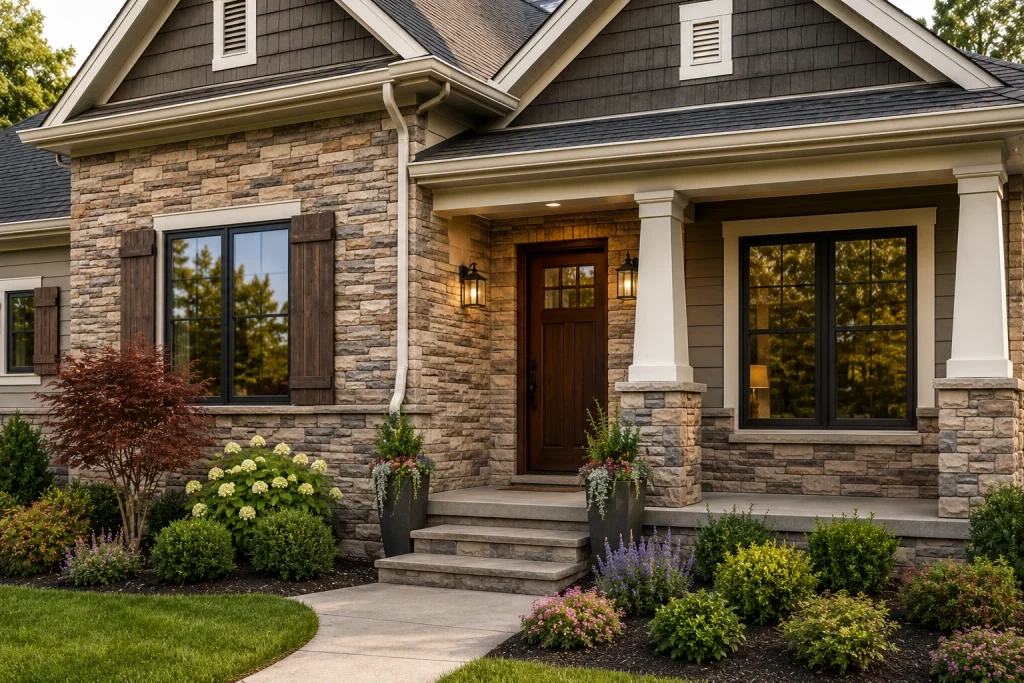
This one surprises people. A strip of manufactured stone across the lower front of the house, basically a stone “skirt,” is one of the highest-returning projects you can do, and it performs especially well here in the South Atlantic region.
Why it works: it turns a plain builder-grade ranch or a flat beige facade into something that looks custom and upscale, without the cost or weight of real stone. For the sea of vinyl-sided homes across the Piedmont, it’s one of the biggest visual upgrades available. If your home already has strong architecture or a distinct style, though, stone veneer might fight it. Use judgment.
4. A Minor Kitchen Remodel Adds More Value Than a Full Gut

Here’s where people go wrong. The kitchen matters, no argument. Buyers judge the whole house by it. But the version that pays off is the light refresh, not the full remodel.
A minor kitchen update returns a large chunk of its cost. A major upscale gut job returns less than half. Spend $80,000 tearing it out and you might see $35,000 of it again. The fancier you go, the worse the math.
So keep it minor. Paint or reface the cabinets instead of replacing them. New hardware. Updated counters, quartz is the sweet spot for durability and low upkeep. Fresh backsplash, better lighting, maybe a stainless appliance or two. Petit Properties, out in the mountains, lands on the same minor-remodel advice for their market. And match the finishes to your neighborhood, quartz in a $400K area, nothing fancy in a $200K one.
5. Fresh Paint and New Flooring Make a Home Feel Move-In Ready

Two projects, one goal: make the inside feel clean, bright, and move-in ready.
Paint is the cheapest high-impact move in the house. Stick to warm neutrals, soft whites, light greys, gentle earth tones. Kill the bold accent walls. Buyers need to picture their furniture in the space, not stare at your teal dining room.
Flooring finishes the job. Worn carpet and cracked vinyl make a house feel tired no matter how clean it is. Luxury vinyl plank has taken over for good reason, it’s affordable, waterproof, looks like real wood, and handles North Carolina humidity better than most alternatives. Together, paint and floors are about as close to a guaranteed win as this list gets.
6. Curb Appeal and Landscaping That Increase Home Value in NC
You keep hearing “curb appeal” because it genuinely works, and it barely costs anything.
This isn’t a big redesign. It’s the basics done well. Mow and edge. Lay fresh mulch and define the beds. Pressure-wash the driveway, walkway, and siding. Pull the overgrown shrubs hiding the house. Add a few low-maintenance native plants near the door, think azaleas, Carolina jessamine, coneflowers, the stuff that thrives here without babysitting. A little lighting on the entry or walkway helps too.
Curb appeal sets the buyer’s mood before they ever open the front door. Cheap, fast, and it punches way above its weight.
7. Energy-Efficient Upgrades North Carolina Buyers Want
North Carolina buyers ask about utility bills now. They want to know the monthly cost before they make an offer. And heads up for 2026: the federal energy tax credits have expired, so buyers aren’t chasing rebates anymore. They just want lower bills and a home that feels well kept.
Go practical, not experimental. A smart thermostat. LED lighting. Better attic insulation, which in our climate often pays for itself in a few years through lower cooling costs. Energy-efficient windows if yours are original and drafty. A high-efficiency HVAC if the old one is on its last legs. None of this is flashy. Nobody gasps at your attic insulation. But it quietly lowers bills and signals a cared-for home.
What Devalues a House: Projects and Problems to Avoid
Knowing what NOT to do saves you just as much money.
Pools are a gamble in North Carolina. Some buyers see a backyard oasis, others see an insurance bill and a chore. Returns are all over the place and usually land near the bottom.
Big upscale additions, master-suite expansions, and luxury kitchen or bath overhauls tend to lose money at resale. Same with anything that pushes you past the neighborhood price ceiling. If every house on your street sells around $350K, a $150K renovation won’t get you to $475K. Buyers just won’t pay it.
Fixing broken stuff is a different category. A dead HVAC, a leaking roof, a bad electrical panel, those aren’t value adds, they’re defensive fixes. They don’t raise your price so much as they stop buyers from beating you down on it. Tight budget? Fix what’s broken before you upgrade what already works.
Should You Renovate Before Selling, or Sell As-Is?
This is the part most articles skip, and it’s the one that matters most.
Every upgrade above assumes cash upfront, time to ride herd on contractors, and a sound house. That’s a big “if.” Renovating before a sale means quotes, permits, delays, dust, and the very real chance someone opens a wall and finds a problem that doubles the budget. And 2026 in North Carolina isn’t the frenzied seller’s market of a few years ago, inventory is up and homes are sitting longer, which changes the payoff on pre-sale work.
So run the other math. What if you skipped all of it and sold as-is?
A cash sale usually lands around 70% to 88% of full market value. Less than a perfectly staged home might fetch on a good day, sure. But look at what you save: no repair budget, no agent commission, no months of mortgage, taxes, insurance, and utilities stacking up while the work drags on, and no risk of the renovation not paying back. Netted out, the gap between the two paths is often much smaller than the sticker prices suggest. We break that down further in our guide on selling a house fast in a buyer’s market.
If the house needs a new roof, has foundation or water damage, or you just don’t have months to spare, renovating may not pencil out at all. That’s exactly when selling as-is makes sense, and here’s more on whether you can sell a house as-is without an inspection if that’s the direction you’re leaning.
The Bottom Line for North Carolina Home Sellers
If you’re fixing up to sell, let the returns pick your projects, not a showroom. Start outside, garage door, front door, stone, curb appeal, then add a light kitchen refresh, paint, and flooring if the budget allows. Stay inside the 30% rule and your neighborhood’s ceiling.
But if the numbers don’t work, or you just don’t have the time and money to do it right, don’t force it. Find out what your home is worth as-is before you spend a dime on repairs. Get a no-obligation cash offer, compare it to what you’d net after renovating, and then you’ll know, with real numbers, which move actually pays off for you.
Frequently Asked Questions
1. What adds the most value to a home in North Carolina?
The upgrades that typically add the most value include a modern kitchen, updated bathrooms, fresh interior paint, energy-efficient windows, new flooring, improved curb appeal, and a well-maintained roof. These improvements make a home more attractive to buyers and can increase its resale value.
2. Which home improvement offers the best return on investment (ROI)?
Projects with the best ROI often include replacing a garage door, repainting the interior, upgrading the front door, making minor kitchen improvements, updating bathrooms, and enhancing landscaping. These improvements are generally more cost-effective than major renovations.
3. Should I renovate my house before selling in North Carolina?
It depends on your home’s condition and budget. Minor cosmetic updates can help attract buyers, but expensive renovations aren’t always necessary. If you need to sell quickly or your home requires significant repairs, selling as-is may be the better option.
4. Does curb appeal really increase a home’s value?
Yes. First impressions matter, and a well-maintained exterior can significantly improve buyer interest. Simple improvements such as mowing the lawn, adding fresh mulch, pressure washing the driveway, and painting the front door can make your home stand out.
5. Is it better to make repairs or sell a house as-is?
If the repairs are minor and affordable, completing them may increase your home’s value. However, if the property needs major work or you want to avoid renovation costs, selling your house as-is to a cash home buyer can save time and eliminate the hassle of repairs, showings, and lengthy negotiations.