
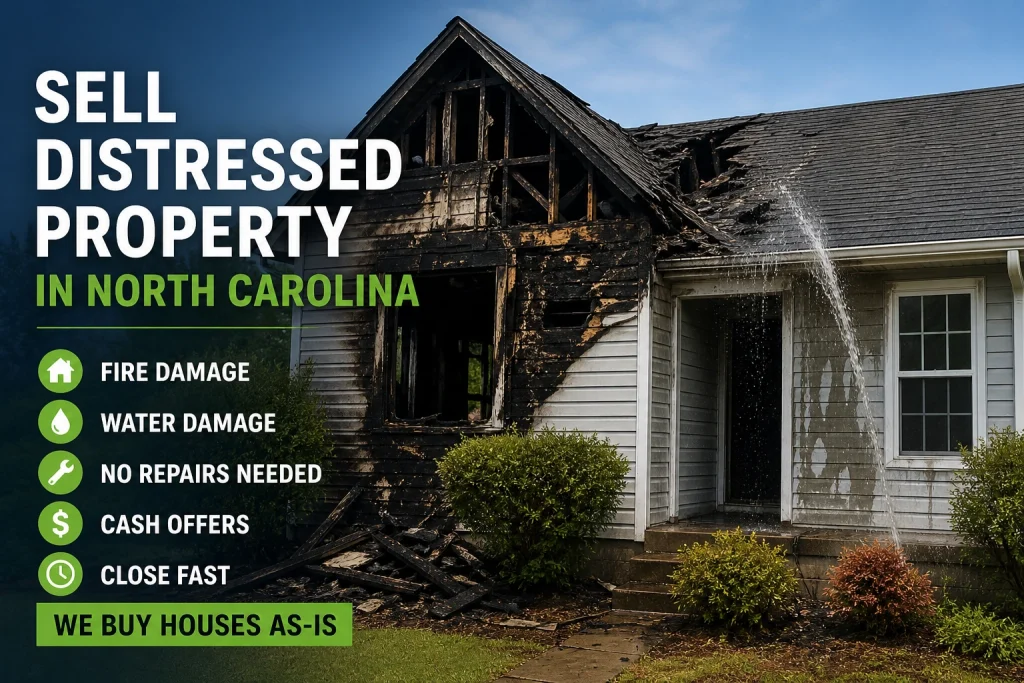
Selling a distressed property in North Carolina can feel like an uphill battle. Whether your home has suffered fire damage, water issues, structural problems, or financial complications, the traditional real estate route often creates more obstacles than solutions.
You may be dealing with repair estimates, insurance delays, or buyers backing out after inspections. On top of that, time pressure—whether financial or personal—can make the process even more stressful.
Here’s the reality most homeowners don’t hear:
You can sell your distressed property without making repairs, without hiring an agent, and without waiting months.
In North Carolina’s current market, there is strong demand from investors and cash buyers specifically looking for distressed homes. The key is understanding how to position your property and who to sell it to.
This guide will walk you through everything step by step.
What Is a Distressed Property in North Carolina?
A distressed property is any home that is difficult to sell through traditional methods due to its condition, financial situation, or ownership complications.
These properties often fall outside the comfort zone of typical buyers, especially those relying on mortgage financing.
Physical Distress (Fire, Water, Structural Damage)
Physical distress refers to visible or hidden damage within the property.
This includes:
- Fire-damaged homes
- Water or flood-damaged properties
- Mold infestation
- Roof leaks or foundation cracks
- Electrical or plumbing issues
Homes in this category often fail inspections or require major repairs, making them less appealing to traditional buyers.
Financial Distress (Foreclosure, Liens, Debt)
Financial distress occurs when the homeowner is under financial pressure.
Examples include:
- Pre-foreclosure or foreclosure
- Unpaid property taxes
- Mortgage arrears
- Liens against the property
In these cases, selling quickly becomes a priority to avoid further financial damage.
Legal & Situational Distress (Inheritance, Vacant Homes, Divorce)
Sometimes, the condition of the home isn’t the main issue—the situation is.
Common scenarios:
- Inherited properties you don’t want to maintain
- Divorce settlements requiring asset division
- Vacant or abandoned homes
- Problem tenants
These situations often require a fast, hassle-free sale.
Can You Sell a Fire-Damaged House in North Carolina?
Yes, you absolutely can.
Even severely damaged homes can be sold, and in many cases, faster than expected.
Fire damage can range from minor smoke damage to complete structural loss. While traditional buyers may hesitate, investors and cash buyers actively look for these opportunities.
Why? Because they evaluate properties differently:
- Cost of repairs
- After Repair Value (ARV)
- Location and resale potential
Even if your home looks unsellable, it still holds value—either as a renovation project or as land for redevelopment.
The key is targeting the right buyer, not trying to force a traditional sale.
Who Buys Fire-Damaged Homes in NC?
Understanding who buys fire-damaged homes helps you avoid wasted time and get better offers.
Real Estate Investors
These are the most common buyers of distressed properties.
They:
- Buy below market value
- Renovate and resell or rent
- Close quickly with cash
They are ideal if you want a fast and straightforward sale.
House Flippers
Flippers specialize in transforming damaged homes into modern properties.
They analyze:
- Repair costs
- Market demand
- Profit margins
They’re often interested in properties with significant—but fixable—damage.
Cash Home Buying Companies
These companies purchase homes directly from sellers.
Benefits include:
- No agent commissions
- No repairs required
- Flexible closing timelines
This is one of the easiest ways to sell a distressed home without complications.
Rental Property Investors
These buyers focus on long-term income.
They are less concerned about cosmetic issues and more focused on:
- Location
- Rental demand
- Basic structural integrity
Builders & Redevelopers
For heavily damaged homes, the value may lie in the land rather than the structure.
These buyers:
- Tear down and rebuild
- Target growing neighborhoods
Selling a Water-Damaged House in North Carolina
Water damage can be just as serious as fire damage—and sometimes more deceptive.
Common Causes of Water Damage
Water damage can occur due to:
- Flooding
- Burst pipes
- Roof leaks
- Poor drainage systems
Even small leaks can lead to major long-term issues if not addressed.
Hidden Issues Buyers Look For
Water damage often comes with hidden risks:
- Mold growth (health hazards)
- Rotting wood and weakened structures
- Electrical system damage
These issues make traditional buyers cautious and often lead to deal cancellations.
Why Water-Damaged Homes Are Hard to Sell Traditionally
Most buyers rely on mortgage financing, which requires:
- Home inspections
- Appraisals
- Insurance approvals
Water damage can cause a property to fail any of these steps.
That’s why many homeowners choose to sell water-damaged homes as-is instead of investing heavily in repairs.
Selling Fire or Water-Damaged Property As-Is
Selling as-is means you’re selling the property in its current condition—without making any repairs or improvements.
Why This Works:
- Investors expect damage
- No inspection stress
- No repair costs
- Faster closing process
You won’t need to:
- Fix structural issues
- Replace damaged systems
- Clean or stage the home
While the sale price may be lower than a fully renovated home, you save significantly on:
- Repair costs
- Holding expenses
- Agent commissions
For most distressed sellers, this is the most practical and stress-free solution.
How to Sell a Distressed Property Fast in North Carolina
Selling fast doesn’t mean rushing blindly—it means following the right process.
Step 1: Assess Property Condition Honestly
Step 2: Define Your Selling Goal
Step 3: Target the Right Buyers
Step 4: Compare Multiple Offers
Step 5: Close on Your Timeline
How to Maximize Profit When Selling a Distressed Home
Even if your property is damaged, you can still optimize your return.
Avoid Over-Improving
Spending too much on repairs rarely gives full ROI. Focus on selling smart, not perfect.
Highlight Location & Land Value
A property in a desirable area can attract strong offers—even if the home itself needs work.
Create Buyer Competition
Reach out to multiple buyers to increase demand and improve your final offer.
Reduce Holding Costs
Every extra month costs you money in:
- Property taxes
- Utilities
- Maintenance
Selling faster often means keeping more profit.
Common Mistakes to Avoid When Selling a Distressed Property
Many sellers lose money due to avoidable errors.
Avoid:
- Overspending on repairs
- Waiting too long to sell
- Accepting the first offer
- Working with inexperienced buyers
- Failing to disclose property issues
Why Cash Buyers Are the Best Option for Distressed Homes in NC
Cash buyers dominate the distressed market—and for good reason.
Key Advantages:
- No financing delays
- No inspections (in many cases)
- No commissions
- Faster closings
They simplify the process and remove uncertainty.
This is especially valuable if your home has:
- Fire damage
- Water damage
- Structural problems
- Financial or legal complications
Final Takeaway
Selling a distressed property in North Carolina doesn’t have to be overwhelming or drawn out. When you’re dealing with damage, financial pressure, or an urgent timeline, the goal isn’t perfection—it’s finding the most practical and efficient way forward.
If your priorities are speed, convenience, and avoiding costly repairs, then selling your home as-is to a cash buyer is often the most reliable solution. It allows you to skip the uncertainty of traditional listings, eliminate upfront expenses, and move on your timeline.
Ultimately, the right approach depends on your situation—but with the right strategy and the right buyer, even a distressed property can be turned into a smooth, stress-free sale.
Frequently Asked Questions FAQs
Can I sell a fire-damaged house without repairs?
Yes. Many investors and cash buyers specialize in buying fire-damaged homes as-is.
How fast can I sell a distressed property in NC?
You can close in as little as 7–14 days with a cash buyer.
Do I need to clean or repair anything?
No. Most as-is buyers purchase properties in their current condition.
Will I get a fair price?
Yes—especially if you compare multiple offers and work with reputable buyers.
Are there any fees or commissions?
Not when selling directly to a cash buyer.